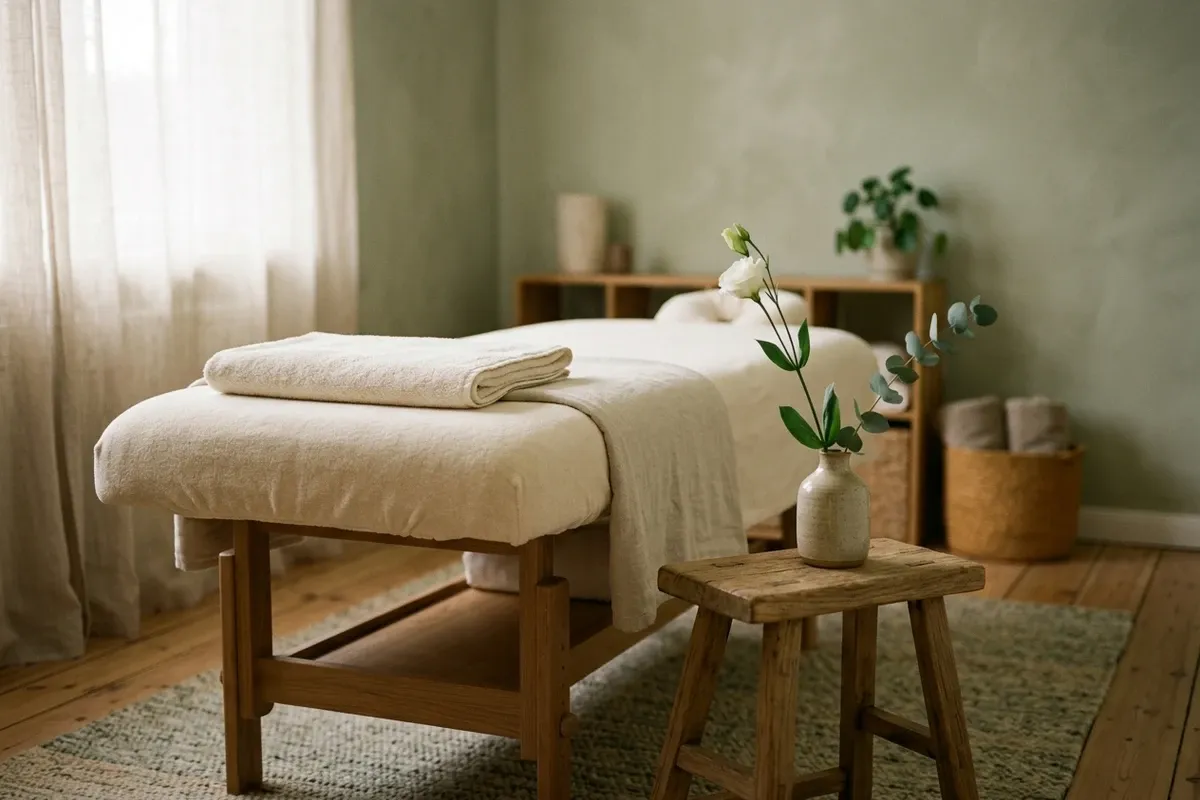
Massage works the muscles and soft tissue directly, with pressure and movement, to release specific tension. Craniosacral therapy is much lighter: you stay clothed while the therapist makes very gentle contact and works with the body’s own rhythms to settle the nervous system. Choose massage for a particular ache, knot or restriction; choose craniosacral for deep settling, long-held patterns, or when ordinary massage feels like too much. Many people benefit from both.
People often arrive unsure which they actually need, and that is completely reasonable, because from the outside the two look worlds apart. Here is how I explain the difference to clients at my treatment room in Honingham.
What each one actually is
Massage is hands-on work with the muscles and soft tissue. There is oil, there is movement, and there is pressure, adjusted to what you want. It ranges from the flowing, restful strokes of a relaxation treatment to the more targeted, precise work of clinical or remedial massage. The common thread is that the therapist is physically working the tissue.
Craniosacral therapy is quite different. You stay fully clothed on a warm couch, and the contact is extremely light, often just still hands resting at your head, the base of your spine or your feet. Rather than working the muscles, it listens to and works with the subtle rhythms and patterns the body holds, inviting the nervous system to let go of tension it has been carrying, sometimes for years. From the outside very little appears to happen. Most people find a great deal does.
How they feel, in practice
- Massage feels active. You feel the strokes and the pressure, you may feel a good “hurts-so-good” release in a tight spot, and you usually get up feeling looser and lighter straight away.
- Craniosacral feels quiet. People describe warmth, a floating or drifting feeling, sometimes a deep drop into rest. The shifts are often subtler in the room and then continue over the following day or two. Deep sleep that night is common.
Neither is better. They are simply different doors into the same house.
Which suits which problem
As a rough guide:
Reach for massage when you have a specific, physical complaint: a tight neck and shoulders from desk work, lower back or hip tension, a sports niggle, stiffness after an injury or surgery, or you simply want an hour of restorative, hands-on rest.
Reach for craniosacral when the picture is more diffuse or the nervous system is clearly involved: tension headaches or jaw tension, recovery from an accident, illness or birth, trouble winding down and sleeping, or a body that feels braced and won’t settle. It is also a gentle choice if you find ordinary massage too much, for instance during recovery from serious illness.
Can you have both?
Yes, and many people do. In fact, at Blossom Yoga I no longer treat them as two separate bookings: my Clinical Massage treatment draws on both, and we decide together at the start of each session where it should sit, firmer and more structured where there is a specific issue to work through, quieter and stiller where your system needs settling rather than muscle. That balance can change from one visit to the next.
If what you are really after is an hour of unhurried, restorative rest rather than targeted work, the Blossom Signature Massage is the gentler, more flowing option.
How to choose, if you are still unsure
You do not have to decide perfectly in advance. Book based on the stronger pull, a specific ache points towards massage, a need to simply come down and settle points towards craniosacral, and mention your uncertainty when you get in touch. I send a short questionnaire before a first appointment, and we can talk it through at the start. The treatment adapts to what your body needs on the day, which is rather the point.
References
- Haller H, Lauche R, Sundberg T, Dobos G, Cramer H. Craniosacral therapy for chronic pain: a systematic review and meta-analysis of randomized controlled trials. BMC Musculoskeletal Disorders, 2019.
- Haller H, Lauche R, Cramer H, et al. Craniosacral therapy for the treatment of chronic neck pain: a randomized sham-controlled trial. The Clinical Journal of Pain, 2016.
